
Applications & Systems
Rechargeable batteries in energy storage
How cell chemistry relates to battery storage systems: power, usable energy, conversion losses, operating duty and the evidence needed for lifetime comparisons.
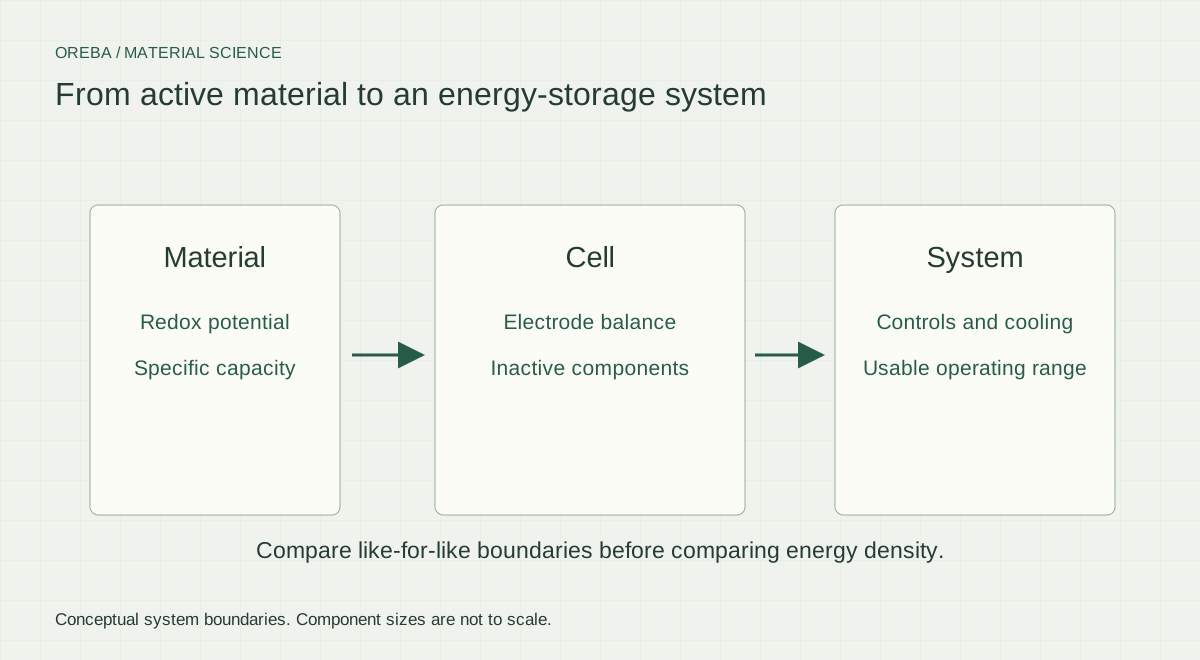
A battery storage system connects electrochemical cells to an electrical duty through modules, controls, thermal management and power conversion. The duty might require shifting energy between times of day, supplying brief power changes or supporting a supply during interruptions. Different duties impose different current, time and availability requirements.
The IEA’s 2024 report Batteries and Secure Energy Transitions discusses batteries in transport and stationary electricity storage. Its deployment figures belong to the reporting periods specified there. This page uses the report for application context and does not present its historical statistics as current 2026 data. [1]
Power and stored energy answer different questions
Power is the rate of delivering energy. Usable energy is the amount delivered between specified operating limits. For a constant-power duty, the idealized relation is , with consistent units. Real duration also depends on losses, voltage limits, reserve capacity and changes in power during the duty.
A nameplate energy value therefore needs a measurement boundary. It might refer to nominal cell energy, a usable DC battery window or energy delivered after an inverter. Comparisons require the same boundary and reference conditions.
The glossary defines the related terms. The LFP chemistry article explains why active-material capacity is several steps removed from system energy.
Chemistry and system design
LFP offers a specific positive-electrode chemistry, but selecting it does not complete the storage-system design. Cell balancing, protection, cooling, voltage range and maintenance remain relevant. A module can also be limited by the weakest cell or by a power-conversion component rather than by average active-material behaviour.
The LFP reference connects its material properties to complete cells. The solid-state reference describes a different set of electrolyte and interface requirements. Neither chemistry label determines system efficiency or delivered lifetime without additional evidence.
Operating duty changes ageing
Periods at high state of charge, temperature variation, charging current and depth of discharge can affect different degradation mechanisms. Edge and colleagues explain why ageing involves interacting processes; capacity loss and resistance growth need not follow the same trajectory. [2]
Safari and Delacourt’s graphite/LFP cell study distinguishes specified storage and cycling conditions. Transferring such a result to a system requires a justified relationship between the tested protocol and the actual duty. [3]
For stationary storage, elapsed years and delivered energy throughput may be as relevant as counted cycles. The degradation reference explains what to retain when comparing life tests or extrapolating a service-life model.
A useful system specification
State the power and energy boundary, usable operating window, reference temperature, duty profile and replacement criterion. Efficiency should identify the charge and discharge conditions and whether auxiliary loads are included. Cost statements need a currency, date, scale and list of included components.
The research library provides the material and ageing background for interpreting such specifications. Current market or deployment claims require a separately dated source review; a laboratory material result cannot substitute for that evidence.
References
Batteries and Secure Energy Transitions: status of battery demand and supply. IEA, 2024.
Lithium ion battery degradation: what you need to know. Physical Chemistry Chemical Physics, 2021. DOI: 10.1039/D1CP00359C.
Publisher or institutional record ↗Aging of a Commercial Graphite/LiFePO4 Cell. Journal of The Electrochemical Society, 2011. DOI: 10.1149/1.3614529.
Publisher or institutional record ↗